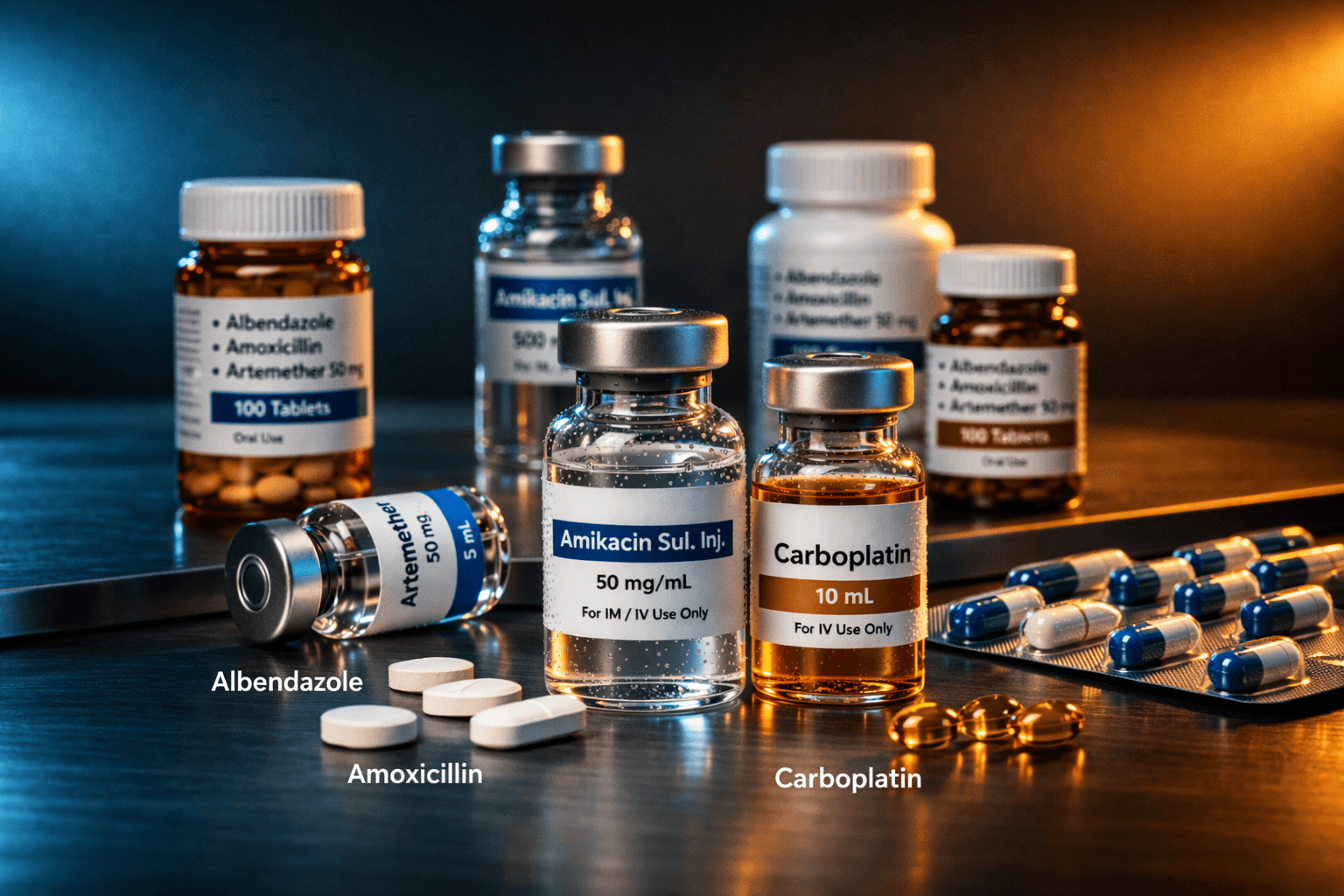
Amiodarone Hydrochloride
Amiodarone Hydrochloride by LARKSOIS Pharma is a specialized antiarrhythmic pharmaceutical ingredient used in the management of serious heart rhythm disorders under professional medical supervision. With CAS Number 19774-82-4, Amiodarone Hydrochloride is recognized for its role in controlling life-threatening ventricular arrhythmias where other therapies may not be suitable or effective. LARKSOIS Pharma focuses on quality-driven manufacturing, reliable sourcing, and international pharmaceutical standards to support healthcare systems, distributors, and regulated pharmaceutical markets.
Product Name
Amiodarone Hydrochloride
CAS Number
19774-82-4
Therapeutic Class
Antiarrhythmic / Cardiac medicine
Molecular Weight
Around 681.77 g/mol
Key Information
Product Name
Amiodarone Hydrochloride
CAS Number
19774-82-4
Therapeutic Class
Antiarrhythmic / Cardiac medicine
Molecular Weight
Around 681.77 g/mol
| Product Name | Amiodarone Hydrochloride |
| Brand | LARKSOIS Pharma |
| CAS Number | 19774-82-4 |
| Therapeutic Class | Antiarrhythmic / Cardiac medicine |
| Drug Class | Vaughan Williams Class III antiarrhythmic |
| Use Type | Prescription medicine only |
| Primary Use | Serious heart rhythm disorders |
| Chemical Formula | C₂₅H₃₀ClI₂NO₃ |
| Molecular Weight | Around 681.77 g/mol |
Amiodarone Hydrochloride CAS 19774-82-4 – Complete Product Information
Amiodarone Hydrochloride is a cardiac antiarrhythmic medicine mainly used for serious rhythm disturbances of the heart.
It belongs to the Vaughan Williams Class III antiarrhythmic group, although its action is broader because it also affects sodium channels, calcium channels, and beta-adrenergic activity.
This makes Amiodarone Hydrochloride a clinically important medicine for selected patients with dangerous ventricular arrhythmias.
From a pharmaceutical product point of view, Amiodarone Hydrochloride CAS 19774-82-4 is a high-value cardiac medicine that requires strict quality control, accurate formulation, and responsible clinical use.
It is not a general-use medicine and should only be used as prescribed by qualified healthcare professionals.
Official prescribing information notes its use for documented, life-threatening recurrent ventricular fibrillation and hemodynamically unstable ventricular tachycardia in adults when other antiarrhythmics have not worked or cannot be tolerated.
LARKSOIS Pharma presents Amiodarone Hydrochloride as a globally relevant cardiac-care product, developed with attention to pharmaceutical consistency, patient safety, and regulatory expectations.
Important Product Information
Product Name
Amiodarone Hydrochloride
Brand
LARKSOIS Pharma
CAS Number
19774-82-4
Therapeutic Class
Antiarrhythmic / Cardiac medicine
Drug Class
Vaughan Williams Class III antiarrhythmic
Use Type
Prescription medicine only
Primary Use
Serious heart rhythm disorders
Chemical Formula
C₂₅H₃₀ClI₂NO₃
Molecular Weight
Around 681.77 g/mol
Clinical Importance
Amiodarone Hydrochloride CAS 19774-82-4 is widely recognized in cardiac therapy because of its ability to help stabilize abnormal electrical activity in the heart.
However, due to its complex safety profile, Amiodarone Hydrochloride should be monitored carefully during treatment.
Uses of Amiodarone Hydrochloride
Amiodarone Hydrochloride is mainly used for the treatment and control of serious arrhythmias.
These are conditions where the heartbeat becomes irregular, too fast, or unstable.
- Life-threatening ventricular fibrillation
- Hemodynamically unstable ventricular tachycardia
- Serious recurrent ventricular rhythm disorders
- Selected rhythm-control cases under cardiology supervision
- Hospital-managed emergency rhythm stabilization in injectable form
Medical Monitoring
Amiodarone Hydrochloride is considered a high-risk but highly important medicine because it may be used when the heart rhythm disorder itself can be dangerous.
It is commonly handled under strict medical direction with ECG monitoring, blood tests, thyroid monitoring, liver function checks, and lung assessment.
How Amiodarone Hydrochloride Works
Amiodarone Hydrochloride CAS 19774-82-4 works by affecting the electrical signals of the heart.
It helps prolong the cardiac action potential and refractory period, which can reduce abnormal rhythm activity.
In simple terms, Amiodarone Hydrochloride helps the heart maintain a more stable rhythm by slowing abnormal electrical impulses.
Because it has a long half-life and remains in the body for a long time, its effect may continue even after treatment is stopped.
Patient medication guidance notes that side effects may still appear after stopping because the medicine can remain in the body for months.
This long-lasting action is one reason why Amiodarone Hydrochloride must be used carefully and monitored regularly.
Dosage Guidance
Important: Dosage of Amiodarone Hydrochloride must always be individualized by a doctor based on the patient’s condition, arrhythmia severity, response, age, cardiac status, and safety monitoring.
Oral Dosage Guidance
Official prescribing information for oral Amiodarone Hydrochloride describes individualized dosing, using the lowest effective dose.
A common adult oral loading approach may begin with 800–1600 mg per day until response occurs, usually over 1 to 3 weeks.
This is followed by reduction to 600–800 mg per day for one month, and then a usual maintenance dose of around 400 mg per day.
Injectable Dosage Guidance
For intravenous Amiodarone Hydrochloride, treatment is generally hospital-based.
DailyMed labeling describes a starting dose of about 1000 mg over the first 24 hours, beginning with an initial loading infusion followed by maintenance infusion under professional monitoring.
Administration Points
- Use only under medical prescription
- Do not adjust dose without a doctor
- Baseline ECG, liver, thyroid, lung, and electrolyte checks may be required
- Follow consistent timing and food instructions as advised
- Avoid missing follow-up monitoring during therapy
Storage Instructions
Proper storage helps maintain the quality and stability of Amiodarone Hydrochloride CAS 19774-82-4.
- Store at controlled room temperature as per product label
- Protect from direct light
- Keep away from excessive heat and moisture
- Do not use after expiry date
- Keep out of reach of children
- Store in original packaging until use
Additional Storage Information
For tablet products, prescribing information commonly recommends room-temperature storage and protection from light.
Shelf Life
The shelf life of Amiodarone Hydrochloride depends on the final dosage form, packaging, stability data, and regulatory approval.
In general, pharmaceutical products are assigned shelf life only after stability testing.
- Follow the expiry date printed on the label
- Do not use damaged or discolored product
- Keep packaging sealed until use
- Avoid storage in humid or hot environments
- For injectable forms, check clarity and container integrity before use
Shelf Life Stability
LARKSOIS Pharma focuses on stable packaging, controlled manufacturing, and quality assurance to help maintain product reliability throughout its approved shelf life.
Manufacturing Information
Amiodarone Hydrochloride by LARKSOIS Pharma is positioned as a quality-focused cardiac medicine manufactured with attention to pharmaceutical safety and international standards.
- Quality-tested active pharmaceutical ingredient
- Batch-wise quality control
- Stability and identity testing
- Controlled production environment
- Documentation-based quality assurance
- Compliance-focused packaging and labeling
- Suitable approach for regulated and export markets
Manufacturing Standards
Because Amiodarone Hydrochloride CAS 19774-82-4 is used in serious cardiac therapy, manufacturing accuracy is extremely important.
Every batch must meet defined specifications for purity, strength, identity, and stability.
Precautions
Amiodarone Hydrochloride requires careful medical supervision because it can affect multiple organs.
- Use only for prescribed cardiac conditions
- Avoid use in patients allergic to amiodarone, iodine, or ingredients
- Use caution in liver disease, thyroid disease, lung disease, and low blood pressure
- Regular liver function tests may be required
- Thyroid function should be monitored before and during treatment
- Lung symptoms such as cough or breathing difficulty should be reported immediately
- Avoid grapefruit juice during therapy, as it may increase amiodarone levels
- Avoid excessive sun exposure because photosensitivity may occur
- Pregnant and breastfeeding patients should consult a specialist before use
Patient Guidance
Medication guidance states that grapefruit juice should be avoided during treatment and that patients should protect skin from sunlight because Amiodarone Hydrochloride can increase sun sensitivity.
Side Effects of Amiodarone Hydrochloride
Like all medicines, Amiodarone Hydrochloride may cause side effects.
Some effects are mild, while others may be serious and need urgent medical attention.
Common or Possible Side Effects
- Nausea
- Vomiting
- Fatigue
- Dizziness
- Slow heartbeat
- Photosensitivity
- Trembling or shaking
- Skin discoloration
- Numbness or tingling
- Difficulty walking or poor coordination
Serious Side Effects
- Lung toxicity or breathing problems
- Liver injury or abnormal liver function tests
- Thyroid problems, including hypo- or hyperthyroidism
- Vision changes or eye complications
- Worsening arrhythmia
- Severe slow heartbeat
- Low blood pressure
- Severe skin reactions
- Yellowing of eyes or skin
- Chest pain or fainting
Important Safety Information
Mayo Clinic lists symptoms such as cough, dizziness, painful breathing, sun sensitivity, tremor, weakness, blue-gray skin discoloration, blurred vision, slow heartbeat, swelling, unusual tiredness, and yellow eyes or skin as possible side effects requiring attention.
Why Amiodarone Hydrochloride Is Considered a High-Risk Drug
Amiodarone Hydrochloride is considered high risk because it may affect the lungs, liver, thyroid, eyes, nerves, skin, and heart rhythm.
It is powerful and useful, but it requires monitoring.
The British Heart Foundation notes that Amiodarone can have significant side effects, including thyroid effects, and should be reviewed regularly during treatment.
- Long duration in the body
- Risk of serious lung toxicity
- Risk of liver injury
- Thyroid imbalance due to iodine content
- Multiple drug interactions
- Need for ECG and laboratory monitoring
- Potential for serious cardiac effects
Why Choose LARKSOIS Pharma?
LARKSOIS Pharma aims to deliver reliable pharmaceutical products for domestic and international healthcare markets.
Conclusion
Amiodarone Hydrochloride CAS 19774-82-4 by LARKSOIS Pharma represents a specialized cardiac product intended for responsible medical use, regulated distribution, and professional healthcare settings.
Frequently Asked Questions
Click any question to expand the answer.
What is Amiodarone Hydrochloride used for?+-
Amiodarone Hydrochloride is used to manage serious heart rhythm disorders, especially life-threatening ventricular arrhythmias. It helps stabilize abnormal electrical activity in the heart and should only be used under professional medical supervision.
Why is Amiodarone a high risk drug?+-
Amiodarone is considered high risk because it may affect the lungs, liver, thyroid, eyes, nerves, skin, and heart rhythm. Regular monitoring is required to reduce complications and improve treatment safety.
What should be avoided while taking Amiodarone?+-
Patients taking Amiodarone should avoid grapefruit juice and excessive sun exposure. Grapefruit may increase drug levels, while sunlight can worsen photosensitivity. Always follow the doctor’s advice regarding food, medicines, and activities.
What class of drug is Amiodarone Hydrochloride?+-
Amiodarone Hydrochloride is mainly classified as a Vaughan Williams Class III antiarrhythmic medicine. It is used in cardiac rhythm management and works by influencing electrical signaling in the heart.
What are the serious side effects of Amiodarone?+-
Serious side effects of Amiodarone may include lung toxicity, liver injury, thyroid imbalance, severe slow heartbeat, vision problems, worsening arrhythmia, fainting, and severe skin reactions. Immediate medical attention is needed if symptoms appear.